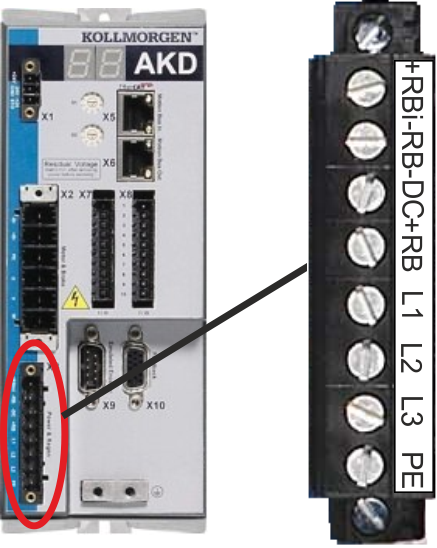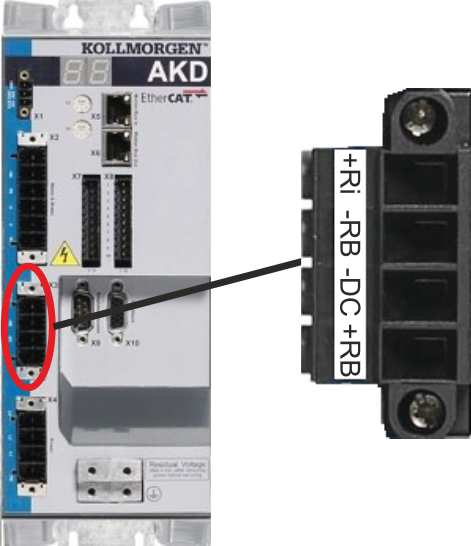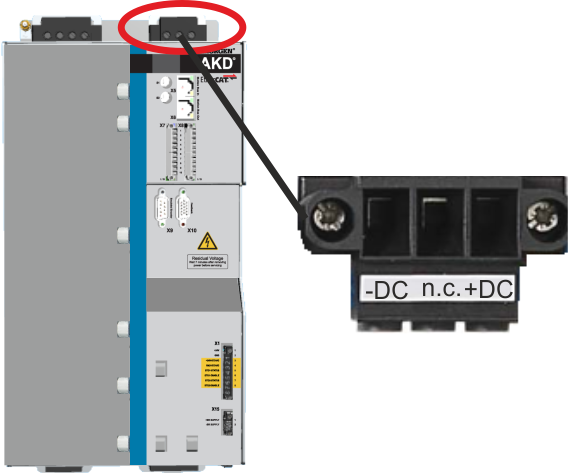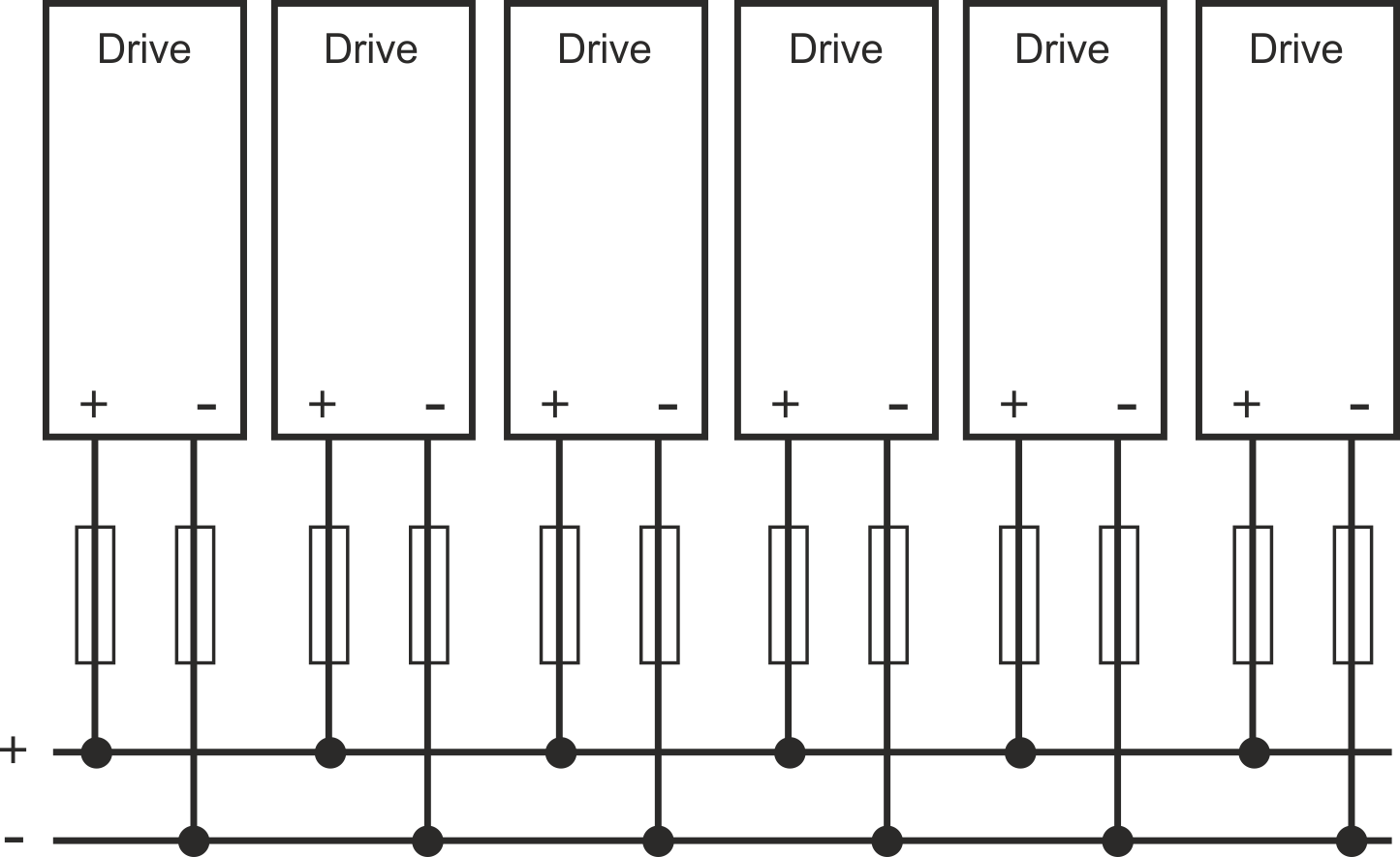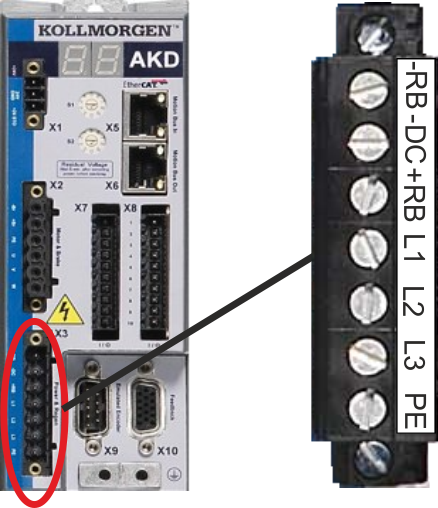
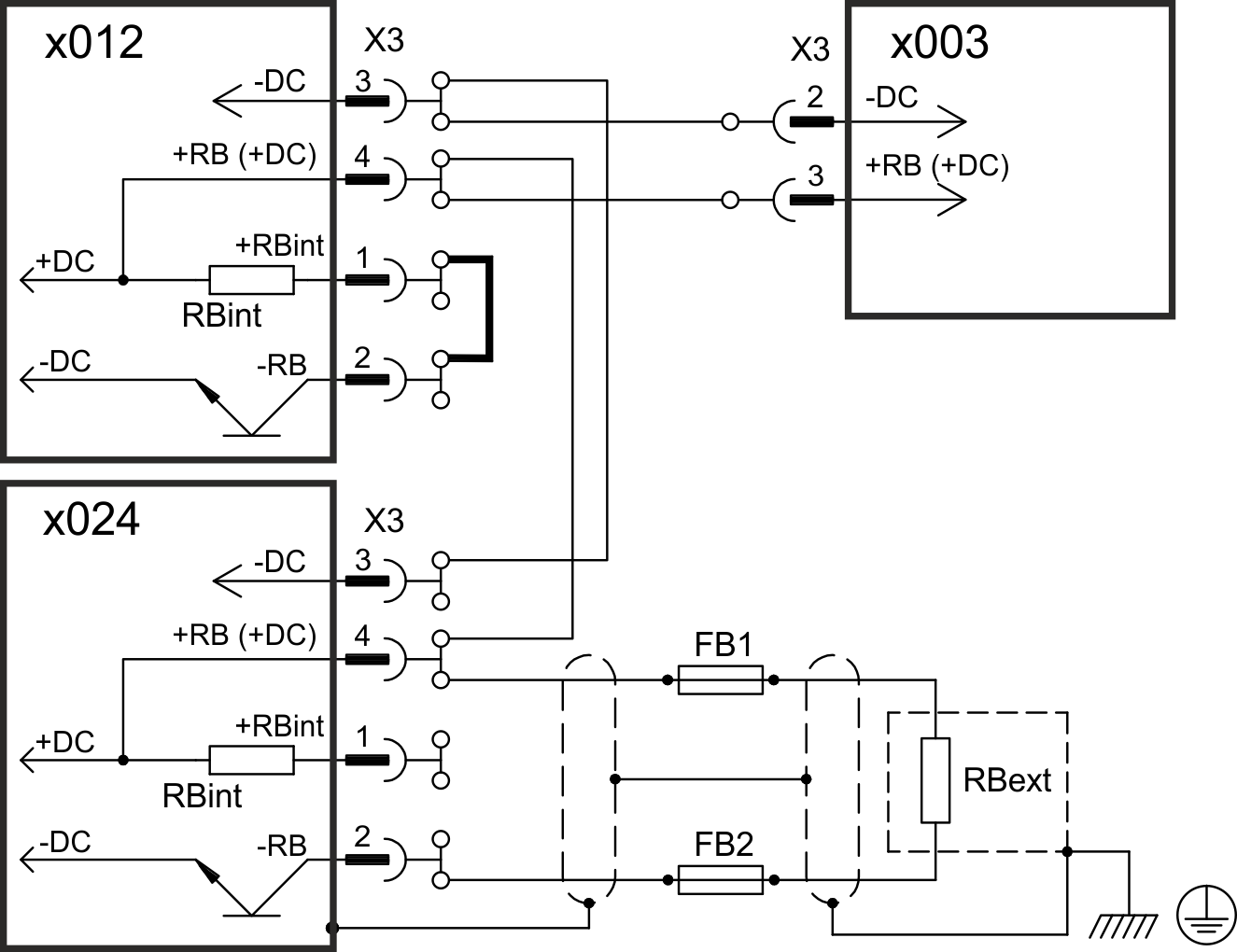
The DC bus linkRectified and smoothed power voltage can be connected in parallel so that the regen power is divided between all the drives that are connected to the same DC bus link circuit. Every drive must have it's own power connection to mains voltage, even if the DC bus link is used. Drives working generatively very often should be placed beside drives, which need energy. That reduces current flow on longer distances.
|
|
|
|||||||||||||||
|
|
|
|||||||||||||||
|
|
|
|||||||||||||||
|
|
NOTE: Should be connected in parallel only with 048 drives. |
|||||||||||||||
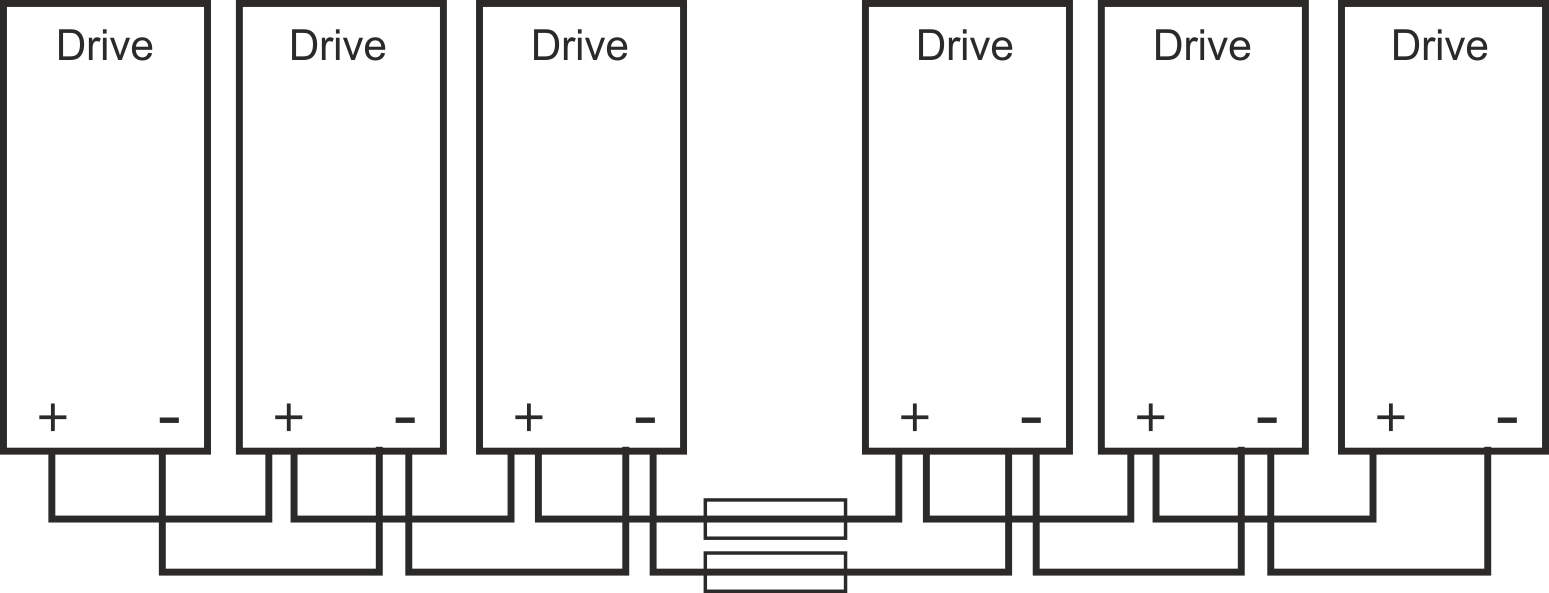
Without DC Bus fuses, other devices can become damaged or destroyed if, for example, a device fails due to an internal short circuit. If multiple drives are connected in parallel, then it is usual to insert DC Bus fuses () between groups of drives (with a group consisting of two or three devices, depending on the current) in order to limit any possible resulting damage. Fuses cannot avoid damage by current peaks completely.
This wiring does not require Y connectors. If a device fails due to a short-circuit, only its DC Bus fuses () are tripped and the rest of the network continues uninterrupted. The solid busbars can conduct significantly larger currents, because the compensating current does not flow through the connector as above. For this reason, almost as many drives as desired can be connected in parallel in this form. This arrangement is frequently also useful for connecting KCM capacitor modules.
|
Copyright © 2015 Kollmorgen™ |
|